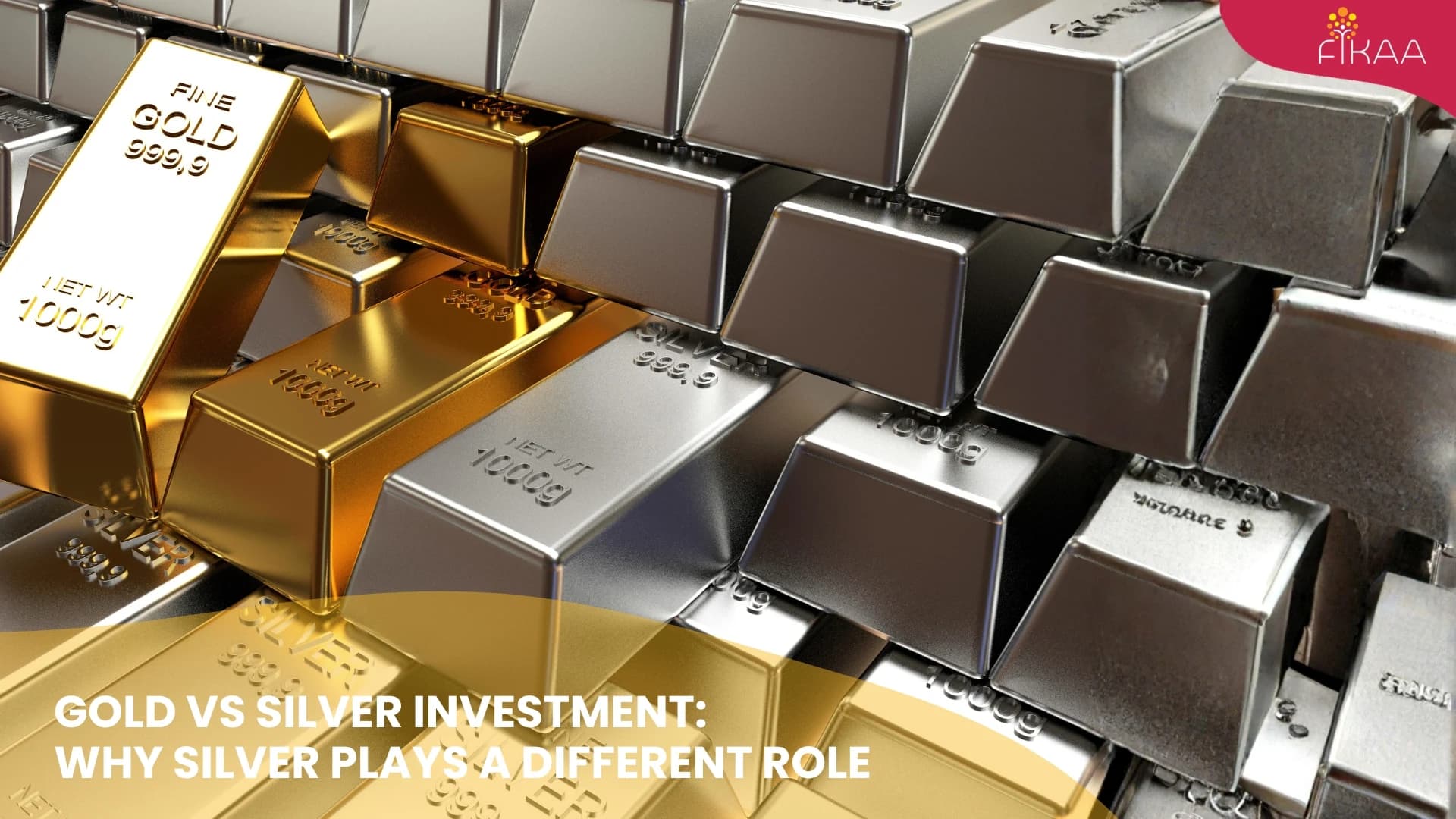
Gold vs Silver Investment: Why Silver Plays a Different Role
August 5, 2026
Ask most Indian households which precious metal they trust, and gold will win without much debate.
It appears at weddings, is passed down through generations and is often treated as a dependable way to preserve wealth. That trust is well earned. Gold has held an important place in Indian households for decades, and its role is unlikely to change.
But silver has earned its place too, for a different reason.
Silver is not only a precious metal. It is also a working metal used across industries such as solar energy, electronics and electric vehicles. That gives it a demand pattern that is different from gold.
Understanding this difference is not about choosing one metal over the other. It is about knowing what role each one can play.
Gold Preserves Value. Silver Does That, and More.
Gold is primarily valued as a store of wealth.
People buy it during uncertain periods, hold it across generations and use it as a way to protect purchasing power over time. Its price is influenced by factors such as inflation, currency movements, interest rates, geopolitical uncertainty and investor demand.
Silver is influenced by many of the same factors.
However, it also has an industrial role.
Silver is widely used in solar panels because of its electrical conductivity. It is also used in electronics, automobiles, EV components and other technologies that require efficient electrical performance.
This means silver demand does not come only from investors or jewellery buyers. It also comes from industries that need the actual metal.
That industrial demand is one of the main reasons silver can behave differently from gold.
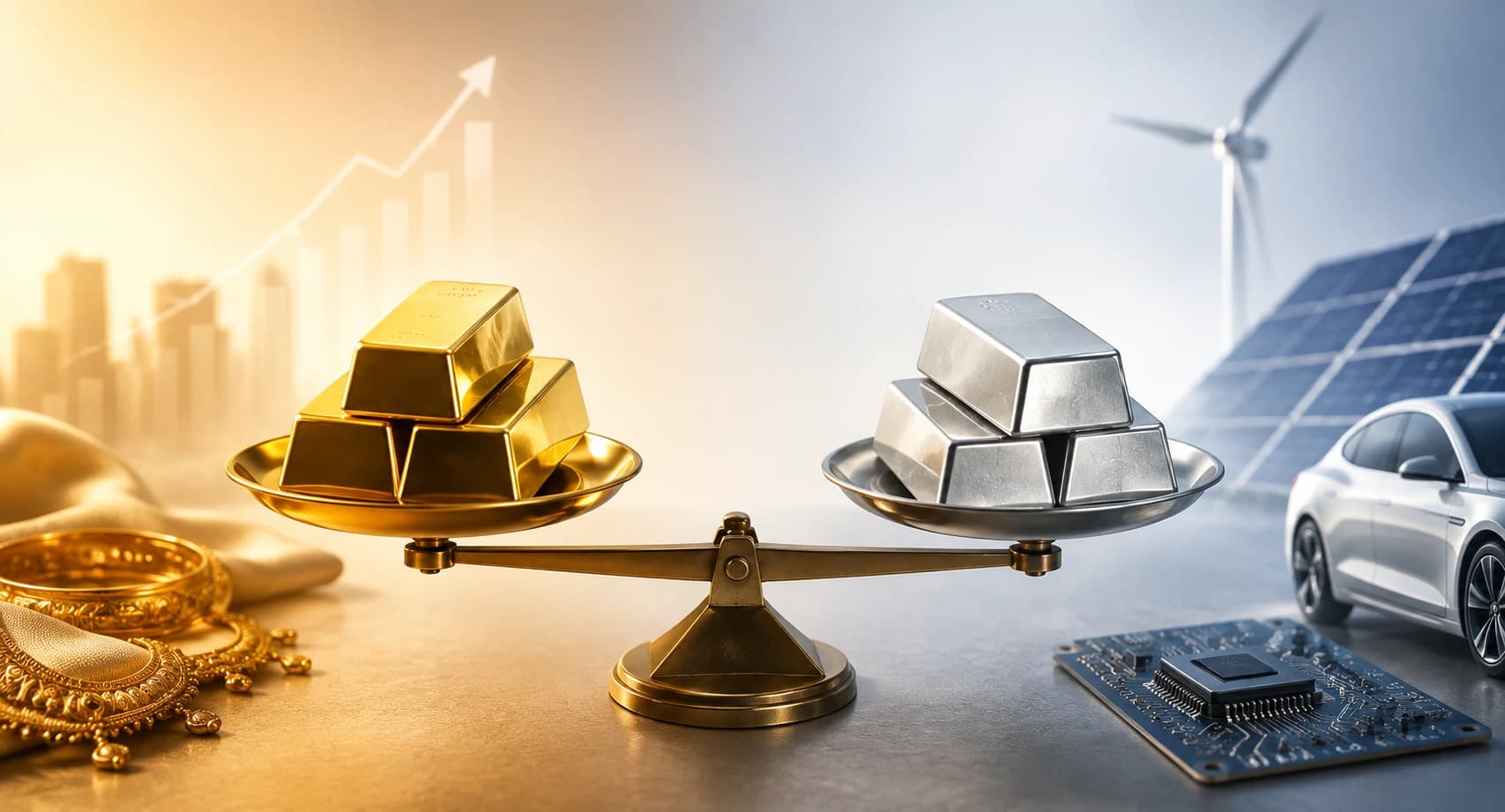
Why Gold and Silver Do Not Move Together
Gold and silver are both precious metals, but their prices do not always move at the same speed or for the same reasons.
Gold usually responds strongly to situations that increase demand for relatively defensive assets, such as inflation concerns, economic uncertainty, currency weakness or geopolitical tension.
Silver can respond to those same conditions, but it is also affected by industrial production, technology demand and global manufacturing activity.
When industrial demand is strong, silver may benefit more directly. When economic activity slows, the same exposure can create additional pressure on its price.
Neither pattern is better.
They are simply different.
And that difference is what can make silver worth understanding alongside gold rather than treating both metals as interchangeable.
Silver Can Move More Sharply
Silver is generally more volatile than gold.
Its industrial exposure can create stronger price movements in both directions. It may rise quickly when investment and industrial demand are strong, but it can also fall more sharply when sentiment or manufacturing demand weakens.
Gold is often seen as the steadier of the two, which is why many investors treat it as the anchor of their precious-metal allocation.
Silver brings a different type of exposure, but it also brings greater price movement.
That is why silver should not be considered a replacement for gold. It may be better understood as an additional precious-metal exposure for investors who are comfortable with higher volatility.
Does Holding Both Mean Better Diversification?
Gold and silver are driven by different combinations of factors, so holding both can provide broader precious-metal exposure than holding only one.
However, owning both does not automatically make a portfolio diversified.
They still belong to the same broad asset category and can both be affected by global commodity prices, currency movements and investor sentiment.
A truly diversified portfolio generally includes different asset classes rather than multiple forms of the same one.
Silver can add a different demand driver within precious metals, but it should still be viewed as part of a larger portfolio not the entire diversification strategy.
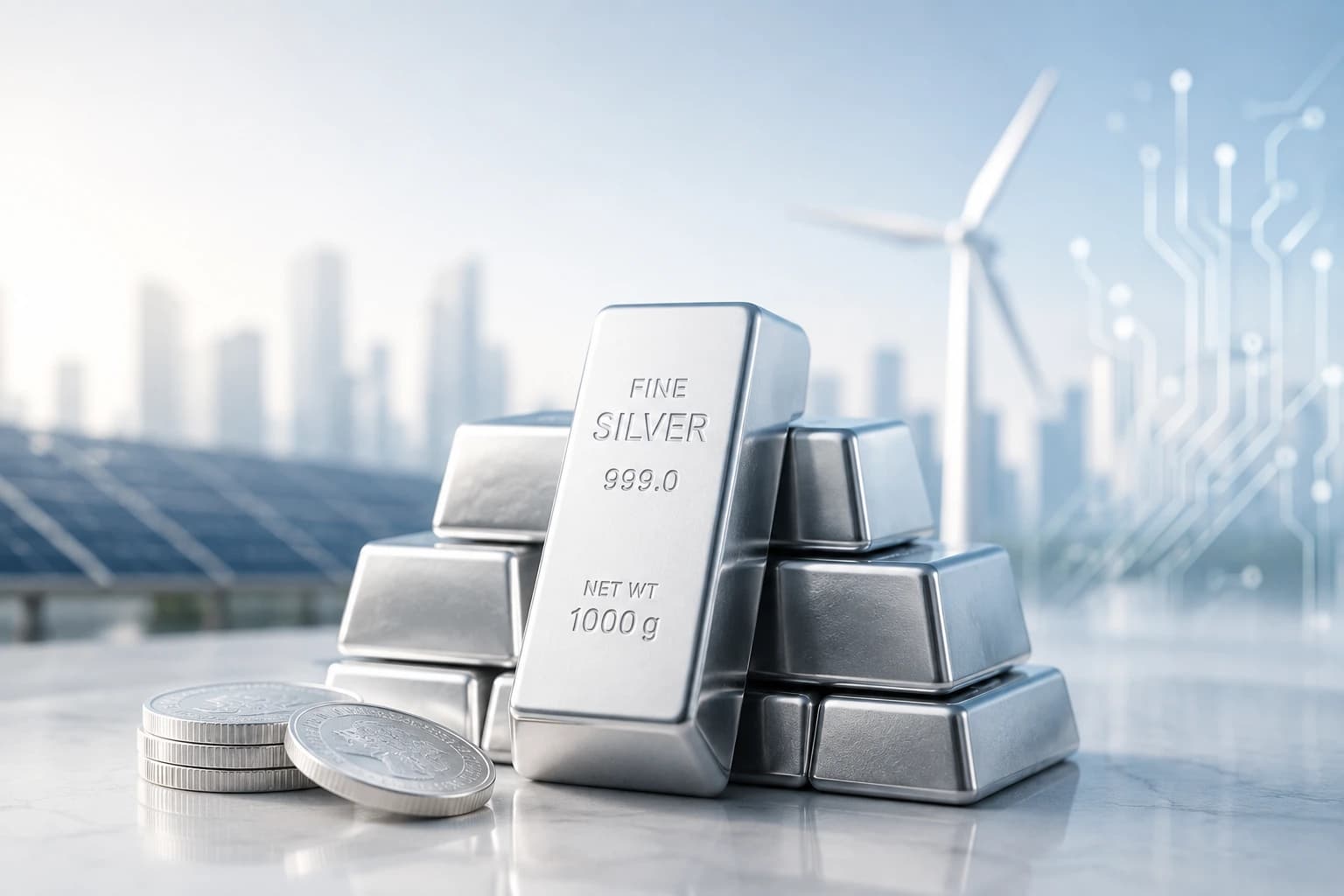
What Is Digital Silver?
Digital Silver allows you to buy a fractional quantity of silver through a digital platform.
Instead of taking physical possession of the metal, the corresponding silver is stored securely on your behalf, and your holding is reflected digitally in your account.
On FIKAA, Digital Silver is offered through Augmont Goldtech. The silver is of 999 purity and is stored in an insured vault.
You can start with a small amount, view the live price before confirming the purchase and pay digitally.
This removes several difficulties commonly associated with buying physical silver, such as checking purity, arranging storage and dealing with varying making charges.
How Digital Silver Works on FIKAA
Buying Digital Silver on FIKAA is designed to be simple.
You open the Digital Silver section, check the live buying price, enter the amount you want to invest and review the quantity of silver before confirming the payment.
Your holding then appears inside the app, where you can track its value and sell it when required, subject to the price and terms available at that time.
FIKAA currently allows users to buy and sell Digital Silver through the app. Physical delivery is not available for Digital Silver through FIKAA.
This distinction matters.
Someone who wants to hold silver coins or bars physically may prefer another route. Someone treating silver purely as a digital portfolio holding may find the absence of physical delivery less important.
What You Should Understand Before Buying
Digital Silver makes purchasing easier, but it does not remove investment risk.
Silver prices can rise or fall depending on global demand, industrial activity, currency movements and investor sentiment.
The buying price and selling price may also differ. GST and other applicable charges can affect the amount required before an investment becomes profitable.
It is therefore important to review the live price, taxes, buying and selling difference, storage structure and partner terms before confirming a purchase.
Digital Silver does not offer fixed or guaranteed returns.
Gold or Silver: Which One Should You Choose?
There is no universal answer.
Gold may suit someone looking for a relatively established precious-metal holding with a long history as a store of value.
Silver may appeal to someone who understands its industrial demand, accepts higher price fluctuations and wants exposure to a metal that behaves differently from gold.
The decision should not be based only on which metal is cheaper or which one has performed better recently.
It should depend on the role you expect the metal to play, your time horizon, your existing investments and your comfort with volatility.
The Bottom Line
Gold has earned its place as a store of value.
Silver has a different role.
It is both a precious metal and an industrial material, which gives it a different set of demand drivers and a different risk profile.
The case for silver is not that it should replace gold.
It is that gold alone does not provide exposure to everything that influences the precious-metals market.
For investors who understand the additional volatility, silver can be considered as a complementary holding rather than a substitute.
Not a replacement.
An addition.
Digital Silver prices may fluctuate. GST, buying and selling price differences and partner terms apply. FIKAA currently does not offer physical delivery for Digital Silver through the app. This content is for educational purposes only and should not be considered investment advice.
Written by Ria Jadav,
August 5, 2026
Latest Blogs
No blogs available.