The Mutual Fund Basics Nobody Actually Explains
September 17, 2026

A friend asked me last month why her mutual fund had barely moved in eight months while her colleague's, in what looked like a similar fund, had grown noticeably more. Same category, same rough time period, different outcome and neither of them could tell you why. That's usually where mutual fund conversations end. Somebody made money, somebody didn't, and the "why" gets waved away as luck.
It isn't luck, mostly. It's a handful of things that decide the outcome long before returns show up on a screen, what kind of fund you actually bought, what it costs you to hold it, and whether it ever matched what you were trying to do with the money in the first place. None of this is complicated once it's laid out properly. It just rarely gets laid out properly.
Mutual funds aren't one thing, they're a category with very different jobs inside it
The first mistake people make is treating "mutual fund" like it's a single product, the way you'd think of a fixed deposit. It isn't. It's closer to a category, the way "vehicle" covers a scooter and a truck, both real, both getting you somewhere, doing nothing alike.
Equity funds put your money into stocks, which means they carry more movement; up and down. But tend to reward patience over the long run. Debt funds put your money into bonds and other fixed-income instruments, trading some of that growth potential for steadier, more predictable behavior. Hybrid funds split the difference deliberately, holding both in some proportion so you're not fully exposed to either extreme.

Inside equity alone, there's more range than people expect, large-cap funds stick to big, established companies and tend to be the calmer end of equity investing; mid-cap and small-cap funds chase faster-growing but less-proven companies, with more volatility as the trade-off. Then there are ELSS funds, which are equity funds with a tax-saving benefit attached under Section 80C genuinely useful if you're already planning to invest in equity and want the tax deduction as a bonus, less useful if you're being pulled toward equity purely because of the tax angle.
None of these is "the best" mutual fund in some universal sense. The best one is the one that matches what you're actually trying to do with that money and how long you're willing to leave it alone.
The number that quietly decides more than people think: expense ratio
Here's something that gets glossed over constantly, and it shouldn't be, because it compounds literally against you every single year you hold the fund.
Every mutual fund charges an expense ratio: a small annual fee, expressed as a percentage of your investment, that covers the cost of running the fund; the manager's decisions, research, administration, all of it. It sounds tiny in isolation. A fund charging 1.5% versus one charging 0.5% feels like a rounding error on paper.
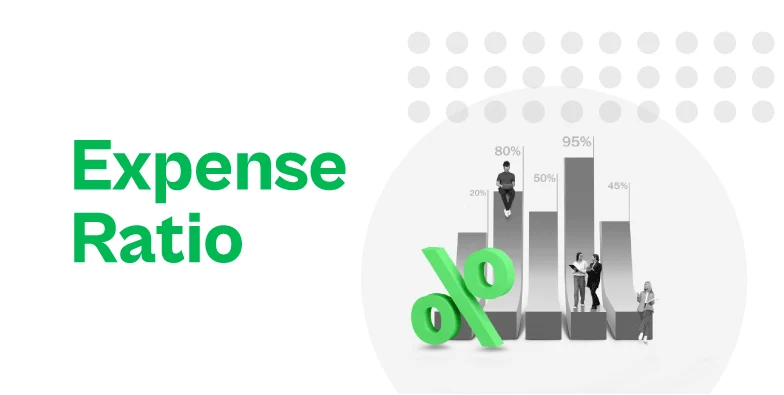
It isn't, once time gets involved. That 1% difference, compounding annually over twenty years on a meaningful investment, can end up costing you a genuinely large chunk of your final corpus not because the fund performed worse, but simply because more of your money was quietly being handed over as a fee every year instead of staying invested and growing. This is exactly the kind of thing that explains why two funds in the same category, with similar underlying performance, can leave you with noticeably different amounts at the end. It's rarely just luck. Sometimes it's the expense ratio, doing its quiet work in the background the whole time.
Worth knowing: direct plans of a mutual fund typically carry a lower expense ratio than regular plans, because regular plans build in a commission for whoever sold it to you. Same fund, same underlying portfolio, different cost structure and that gap alone is often reason enough to check which version you're actually holding.
Choosing a fund for a goal you actually have, not a return you've heard about
People frequently start their mutual fund search with "which fund has the best returns," which is understandable but backwards. Returns are the last thing that should decide anything, because a fund's past returns tell you what happened to someone else's money in a set of market conditions that may never repeat. They don't tell you whether the fund suits what you're trying to do.
The better starting question is your own timeline and purpose. Money you'll need in two or three years; a wedding, a down payment, has no business sitting in an equity fund riding out market swings right before you need to withdraw it; a debt fund or a more conservative hybrid fund fits that job better. Money you genuinely won't touch for ten or fifteen years; retirement, a child's future education can afford to sit through equity's short-term noise, because history suggests that noise tends to smooth out over long enough stretches, even if no year is guaranteed.
Once the timeline is settled, the next filter is consistency, not headline returns. A fund that's delivered steady, category-appropriate performance across different market cycles; a bull run, a correction, a flat stretch, tells you more about how it's actually managed than a single standout year does. A fund that had one spectacular year and several forgettable ones isn't necessarily a better fund; it might just be the one that happened to be in the right sector at the right moment.
And for anyone investing regularly rather than as a lump sum, an SIP changes the math in a genuinely useful way. Because you're investing a fixed amount every month regardless of whether the market's up or down, you end up buying more units when prices are low and fewer when they're high, averaging your purchase cost out over time, without needing to guess when the "right" moment to invest actually is. It's a less dramatic story than timing the market perfectly, but it's a far more repeatable one.
Actually opening an account: the part that used to be the hardest bit
A few years ago, this section would've been the longest part of the article, branch visits, physical forms, days of waiting. That's mostly gone now. Opening a mutual fund account today is a phone-and-a-few-minutes exercise: you complete your KYC digitally using your PAN, Aadhaar, and bank details, which typically gets verified within a day or two if it's your first time doing it. Once that's done, you can select a fund, decide whether you're investing a lump sum or setting up an SIP, and you're in. No paperwork, no courier, no branch queue.
The part worth double-checking before you commit: whether you're buying the direct or regular version of the fund, given what was said earlier about expense ratios, and whether the platform you're using actually shows you that distinction clearly rather than defaulting you into whichever earns them a commission.
Where this actually leaves you
None of this is complicated once it's laid out in order; what kind of fund you're buying, what it's quietly costing you every year, whether it matches your actual timeline, and how straightforward the process of starting has become. Most people never hit a wall with any single one of these. They hit a wall because nobody laid them out together, so a decision that should take twenty minutes of genuine thought gets made off a headline return figure instead.
The friend I mentioned at the start eventually found her answer, her fund had a noticeably higher expense ratio than her colleague's, in a category where the underlying performance was actually fairly close. Nothing dramatic. Just a number she'd never thought to check, quietly doing what it does.
This article is for general informational purposes and does not constitute investment advice. Mutual fund investments are subject to market risks; please read all scheme-related documents carefully and assess your own risk appetite and financial goals before investing.
Written by Ria Jadav,
September 17, 2026
Latest Blogs
No blogs available.